
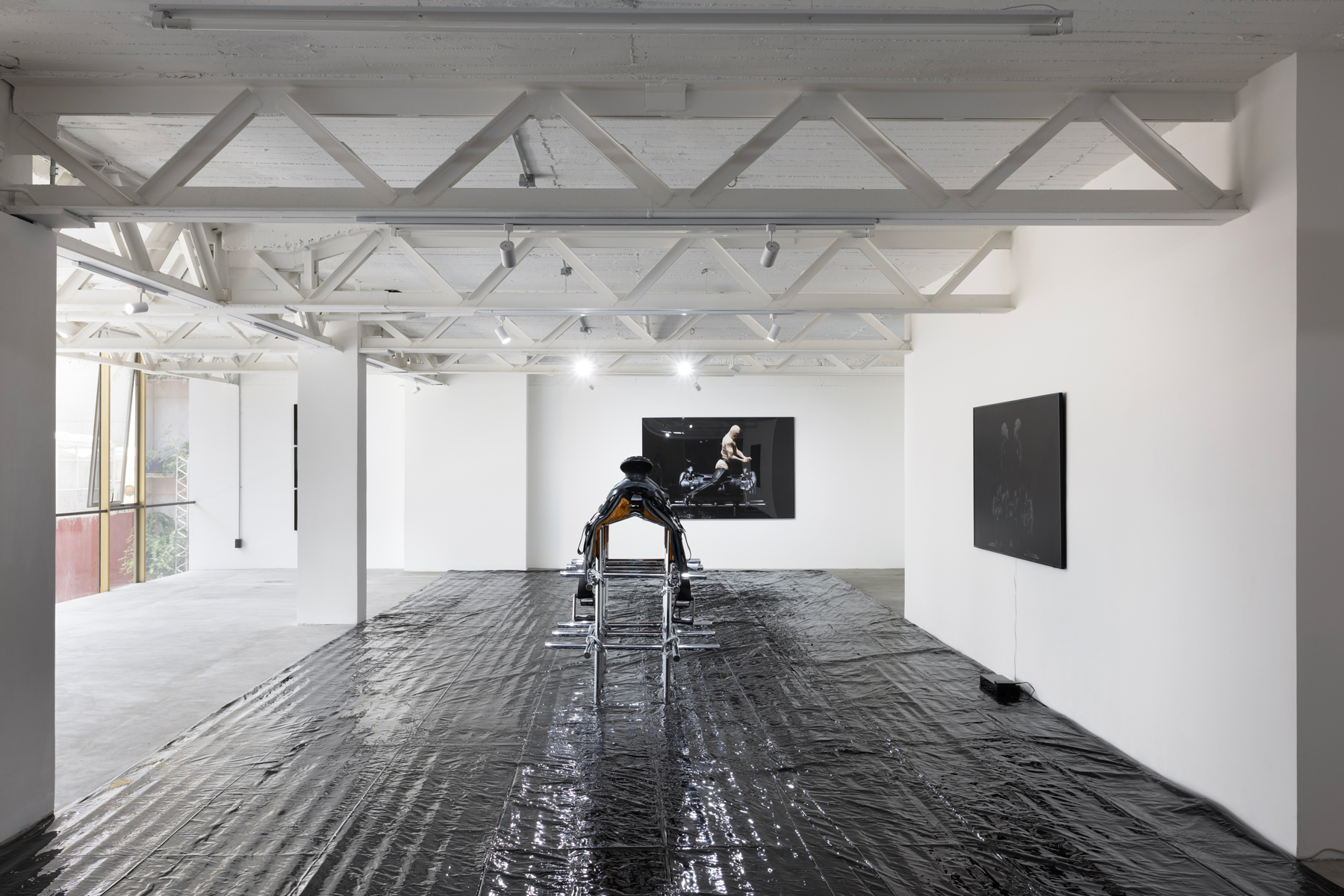
Basoteve at LLANO: dance leaves the stage to expand into the object, the image, and the exhibition space. What is presented here— photographs, video, and a double horse saddle sculpture designed specifically for the exhibition—is not a record of a past choreography, but a material extension of an artistic investigation into the body, memory, and masculinity.
The piece’s origins lie in a seminal childhood memory of Diego Vega Solorza. Raised between Los Mochis and Basoteve—a small village in the state of Sinaloa with barely a handful of houses—Diego spent his childhood days at his grandfather’s ranch, where horses played a central role in the construction of masculine identity. Riding was a test of courage; a demonstration of belonging to a world of men. But for Diego, the saddle also became the setting for one of his first physical and emotional discoveries—an intimate experience that clashed with the expectations surrounding him. While other boys were encouraged to embody the figure of the brave cowboy who had spent hours under the sun, he found different sensations in that same saddle: pleasure, curiosity, vulnerability, and a way of inhabiting his body that defied the codes of Sinaloan masculinity.
From that memory arises the central question of Basoteve: how do objects, spaces, and customs shape our masculine bodies? How do we learn to behave, move, and desire within structures that seem natural but are, in reality, cultural constructs? Here, the saddle becomes a sort of choreographic device. Designed to arrange the body in a specific way, it is also the physical and symbolic axis of the work. Movements, tensions, and relationships unfold around it, revealing both the power of norms and the possibility of deviating from them.
The cowboys who inhabit Basoteve’s choreography are not documentary portraits. They are deliberately exaggerated figures, verging on caricature or drag. They represent a masculinity deeply rooted in the collective imagination of northern Mexico: the man of the countryside, of the horse, and of physical labor. However, the work introduces fissures into that model. What appears to be an affirmation of strength ultimately reveals fragility; what seems to be an image of power hints at desire, ambiguity, and eroticism.
In the end, Basoteve poses a simple yet radical question: What is the purpose of art? The artist himself is wary of grandiloquent answers. He does not believe that art will save the world. But he knows how, in his own case, it allowed him to escape an environment marked by poverty, violence, and exclusion. If a work of art can offer a space to imagine other ways of being, to pause for a moment and see things differently, perhaps that is enough. Perhaps it is enough that, at some point, it saved a life: that of the artist himself.
Text by Guillermo Osorno


